How to Patch a Hole in Drywall and Paint It for a Perfect Match
- sergiobayate
- Feb 9
- 3 min read
A hole in drywall can be an eyesore, but fixing it yourself is easier than you might think. Whether it’s a small dent or a larger hole from a doorknob or accident, patching drywall and painting it to blend seamlessly with the rest of the wall is a skill worth having. This guide walks you through each step clearly, so you can restore your wall to its original look without calling a professional.

Gather Your Materials and Tools
Before starting, make sure you have everything you need. Having the right tools makes the job smoother and the finish better.
Drywall patch or mesh tape (for small holes)
Drywall compound (joint compound or spackle)
Putty knife (4-inch and 6-inch sizes)
Sandpaper (medium and fine grit)
Primer and paint matching your wall color
Paintbrush or roller
Utility knife
Dust mask and safety glasses
Clean cloth or sponge
Prepare the Hole and Surrounding Area
Start by cleaning the damaged area. Remove any loose drywall or paint flakes around the hole using a utility knife. For larger holes, cut the edges into a neat square or rectangle to make patching easier.
Lightly sand the area around the hole to help the compound stick better. Wipe away dust with a damp cloth and let it dry.
Patch the Hole
For Small Holes (Nail or Screw Holes)
Apply a small amount of spackle or joint compound directly into the hole using a putty knife.
Smooth it out so it’s flush with the wall surface.
Let it dry completely, usually a few hours.
For Medium Holes (Up to 6 Inches)
Use a self-adhesive drywall patch or mesh tape to cover the hole.
Press the patch firmly onto the wall.
Apply a thin layer of joint compound over the patch with a putty knife.
Feather the edges to blend with the wall.
Let it dry, then apply a second coat if needed.
For Large Holes (Over 6 Inches)
Cut a piece of drywall slightly larger than the hole.
Trace the patch over the hole and cut the damaged drywall to match the patch size.
Attach a wooden backing inside the hole for support by screwing it into place.
Screw the drywall patch onto the backing.
Cover seams with drywall tape.
Apply joint compound over the tape and screws.
Feather edges and smooth the surface.
Let dry and apply additional coats as needed.
Sand the Patched Area Smooth
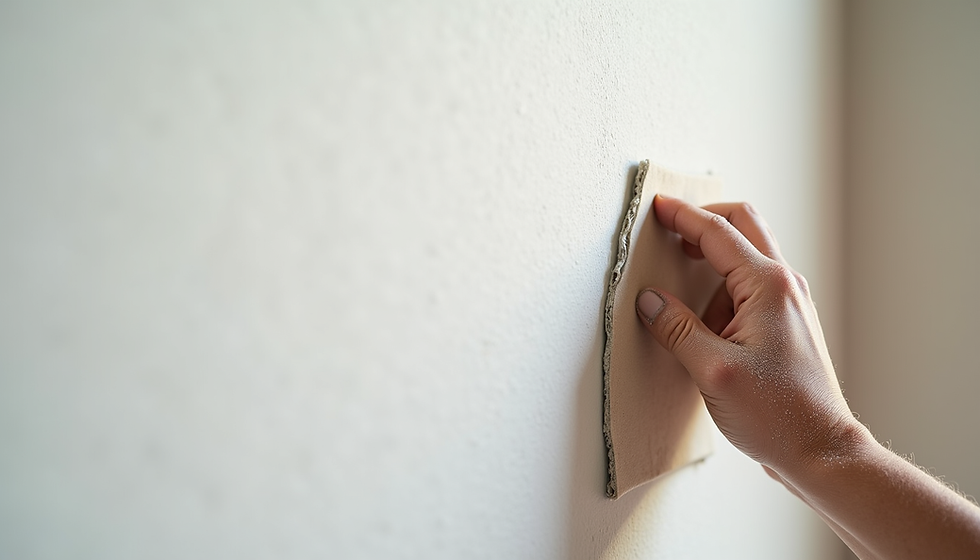
Once the compound is dry, sand the patched area with medium-grit sandpaper to remove bumps. Follow with fine-grit sandpaper for a smooth finish. Be careful not to sand too much and damage the patch.
Wipe away dust with a damp cloth and allow the surface to dry.
Prime the Patched Spot
Priming seals the patch and prevents paint from soaking unevenly. Use a primer suitable for drywall and apply it evenly over the patched area. Let it dry completely before painting.
Paint to Match the Wall
Matching paint perfectly can be tricky but here are some tips:
Use leftover paint from the original job if available.
If not, take a paint chip to a store for color matching.
Use a small brush or roller to apply paint over the primed patch.
Feather the edges to blend with the surrounding wall.
Apply multiple thin coats rather than one thick coat.
Let each coat dry fully before applying the next.
Tips for a Seamless Finish
Work in good lighting to spot imperfections.
Keep your tools clean for smooth application.
Avoid rushing drying times to prevent cracking.
If the wall has texture, try to replicate it before painting.
For textured walls, use a spray texture or a sponge to mimic the pattern.
When to Call a Professional
If the hole is very large, or if you notice structural damage behind the drywall, it’s best to consult a professional. Also, if you want a perfectly smooth or textured finish that matches complex wall patterns, experts can provide a flawless result.


Comments